

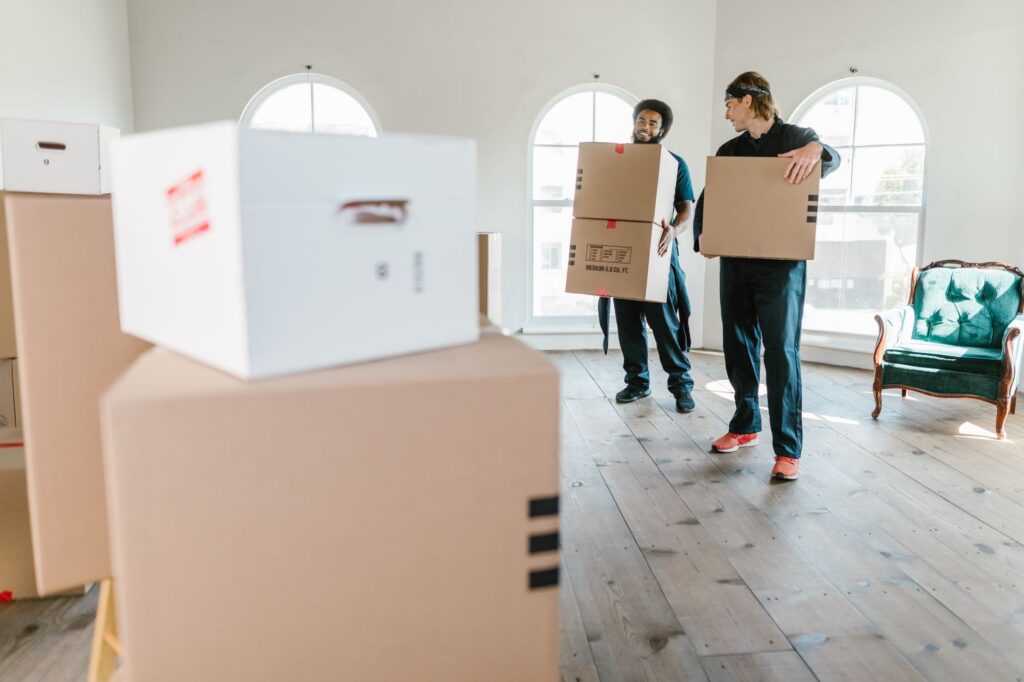
On the clock, a moving crew often loses more minutes to the thirty feet between your front door and the truck than to the furniture itself. The heavy lifting is predictable; the obstacle course on the way out is not. A dresser can be carried in ninety seconds and then sit in the hallway for five because someone has to move a bike, prop a door, and figure out whether the narrow turn at the landing will even allow it through. The fix for all of that happens before anyone arrives, and it comes down to how you prepare the routes themselves.
Driveway Parking vs. Street Parking
The first thing to clear is where the truck will sit, because every extra step between the tailgate and your door multiplies across hundreds of trips. A driveway puts the truck close and keeps the carry short, so empty it the night before. Pull your own cars onto the street, sweep away anything that rolls, and leave the full length open rather than just the width of one vehicle.
If the crew has to park on the street instead, scout it early. Reserve the curb space in front if your municipality allows it, set out cones or bins to hold the spot, and note any low branches or tight entrances that a box truck can’t clear. A crew that has to circle the block or park half a block down is a crew carrying your couch twice as far, and you’re paying for that distance.
Wide Doorways vs. Tight Corners
Doorways are rarely the problem people assume they are; the corners just past them usually are. A standard entry is wide enough for most furniture, but the pivot from the hall into the living room, or the swing around a banister, is where a sofa stalls. Walk your largest pieces’ intended path yourself before the day and look for the choke points.
Where a door swings into the route, lift it off its hinges in advance and set it aside. Remove storm doors and screen doors entirely. Clear the floor and walls of anything that narrows the gap: shoe racks, console tables, framed art, coat hooks at shoulder height. If a corner is genuinely tight, measure both the opening and the item, and decide ahead of time whether a piece comes apart. Discovering mid-carry that a bed frame won’t turn the landing wastes everyone’s morning.
Stairs vs. Elevator Routes
Stairs slow a move more than any other feature, so make them as fast as they can be. Clear every tread of clutter, tape down loose runners or remove them, and make sure the handrail is solid, because movers lean on it with weight in their arms. Good lighting matters here too; a dim stairwell turns a routine descent into a careful one.
An elevator changes the math entirely but only if you’ve arranged it. Book it in advance, confirm it can be held or padded for the move window, and know the car’s interior dimensions so you’re not standing a mattress up at an angle hoping it fits. Have a plan for who holds the doors so the crew isn’t waiting on a call button between every load.
Protected Floors vs. Bare Surfaces
Bare floors slow a crew in a quieter way: everyone steps carefully to avoid scuffs, and careful steps are slow steps. Lay down protection along the entire route the night before so the movers can walk briskly without worrying. Ram board or hardboard over hardwood, adhesive film on carpet, and corner guards on the walls at every turn let people move at full pace.
This is also the point where it helps to have confirmed your crew’s own standards. Reputable outfits that handle a total moving job bring their own padding and floor runners, but your prep covers the gaps they can’t anticipate and shaves real minutes off the clock. Protected surfaces and clear paths let the day run on loading, not on tiptoeing around damage.
Do the walkthrough and clear every route yourself, well before the truck arrives. Leave it to the crew to sort out on the day and you’ll pay for their time learning your house instead of emptying it.